Tag Archives: teaching

It’s “Paper Time” (as opposed to “Screen Time.”)

In the last couple of years, as I introduce myself and my class to students, I explain that we will be employing a mode of learning I call “Paper Time.” This is to counter act the ever-deadening effects of hours of “Screen Time.”

To begin, in my first-semester freshman writing class, we read “How to Focus Like it’s 1990.” This NY Times article tracks the declining attention span of Americans, attributing that decline to the way in which so much reading now occurs on screens. The decline in attention (to text) is bad because sustained attention while we read and re-read is how we develop “critical analysis, inference, deduction and empathy.” These are, like, the four most important skills or qualities we can develop as readers, and frankly as humans who inhabit a shared Earth. We discuss how great an advantage it would be to deliberately cultivate our attention spans and hone these skills and qualities, considering how dire the current situation is.

The article notably describes the difference between the type of attention afforded to text when it’s on a screen versus on paper, and it explains that reading on paper is more conducive to re-reading, which is key to the development of these four essential qualities. For this reason, I explain, I require that students read all the class texts on paper. In this particular class, we mostly read articles and chapters excerpted from non-fiction books, so I usually provide students with these readings.1

To reinforce this lesson, I ask students to take out their phones and take a look at their average daily screen time reports. Most students voluntarily share what they see – and sometimes it’s truly shocking. I had a student once who averaged (AVERAGED!) 23 hours a day on their phone. When asked, she explained that this was because she couldn’t sleep without having YouTube videos playing in the background. Most students will average approximately 8 or 9 hours a day. When they look into the details of how those hours are spent, it’s usually on TikTok or Instagram. Everyone walks away from this experience feeling a lot of alarm.

Incidentally, I also let students scrutinize my phone-use habits. I’ve worked hard over the last few years—by quitting social media and taking anything interesting off my iPhone—to keep my use under an hour a day. I’m usually successful at hitting this goal, though not always. I talk to students about my own struggle to reduce screen time, and we all fantasize together about what we would do with those extra hours if we could wrest back from the phones. No one ever says that they feel great about giving over more than half their waking hours to smartphone apps!

Students in my classes learn that they will be forced off their phones to spend time annotating the readings I assign – looking up every word or concept they don’t know and writing down the definition, summarizing in the margins, and marking passages that they consider important. I show students examples of my own heavy annotation, and I loudly and publicly praise students who come to class showing a lot of ink-based engagement with the readings. Students willingly show one another their annotations, and they start to learn what is possible from one another.

Eventually, I grade the annotations and quiz students on learning any vocabulary. Students often complain at first about this annotation requirement because it slows them down when reading and some are scared about having to memorize definitions, but eventually most get into the habit of it and develop techniques and strategies that they then apply to work in other classes. Some get really into it – buying colorful pens, creating vocabulary lists, and making up their own annotation keys to denote their own markings. Nearly everyone loves it when they start learning the new words – seeing them in other contexts, using them in their own writing, and feeling a sense of command over language.

I am sharing my “Paper Time” strategy here in part because it involves a fun lesson that goes over well in the first weeks of the semester, but also in part because it now provides a great way to counteract the overpowering and overwhelming presence of “AI”-based tools in the classroom.2 Social media is no longer the main culprit, stealing away students’ attention. Now, the LLMs are stealing away their cognitive labor, the main activity that used to constitute “education.” What is worse is that first-year college students are already so used to revving up the LLMs to do their work—many spent all of high school on a computer, and some professors actually require that students use LLMs—that when you instruct them to use a piece of paper and a pen, they are actually very receptive to the change. In fact, most students are extremely happy when I explain “Paper Time” to them. They seem to crave this sort of engagement.

This summer, incidentally, I taught an online asynchronous course for the first time since the pandemic. It was rough for many reasons, one of which is that I’ve become so happy teaching in the “Paper Time” mode that basing the course on a screen once again was unpleasant. Creating an online course is extremely difficult and requires a lot of work to do well; it also involves a lot of screen time, which I eschew. I still attempted in various ways to help the students experience the benefits of “Paper Time”: I tried to require that they print out and annotate the readings and upload images of their annotations.3 I also required that they purchase two books (it was a fiction course, after all). There were two assignments that required students to illustrate imagery based on figurative language in the texts. I made an extra credit assignment in which they had to take a selfie while reading an assigned novel – to show off their cozy reading nooks. The results were super cute (one student was sitting at the hair salon, reading with a huge dryer over her head). A few students told me directly that they appreciated these requirements and assignments, but still it was inevitably hard to create a culture of reading and writing on paper in the online, asynchronous classroom. And for sure it was hard to stem the tide of ubiquitous LLM use. I honestly do not believe it is possible in an asynchronous setting.

I have repeatedly said to students and colleagues that I do not feel like I can measure a student’s ability to meet our learning objectives if they try to meet them using LLMs. I am skeptical and even cynical about attempts to offload any of our cognitive labor to the companies that developed these technologies; I am highly resentful of any attempts to sabotage this precious opportunity we have in the classroom to help students develop “critical analysis, inference, deduction and empathy.” (I’m not sure what this means for online education.) Developing these qualities remains the goals of the classes that I teach, and I don’t think that students can do the cognitive work necessary to become sophisticated readers without getting the chance to put down their screens, turn off their LLMs, and put their pens to paper as they read.

  1. I do some legwork to take into account the various accommodations students need in order to support “Paper Time.” For instance, I had a student who needed all the texts to be in a really large font in order for her to read them. For her, using screens was a matter of convenience given her need for large text, but she actually preferred reading on paper. When I started giving her large-text versions of the readings, other students also wanted the large-text versions because then they had more room for marginal notes. Eventually, I started giving everyone the large-text versions that semester! In short, sometimes accommodations actually improve life for everyone. And I also don’t think that the accommodations that require disabled students to use their screens are necessarily the ones that the disabled students always prefer. So it’s worth it to have conversations with individuals to figure out what works. ↩︎
  2. I put “AI” in quotation marks because the Large Language Model LLM tools such as ChatGPT, Copilot, Claude, etc. are not actually AI. ↩︎
  3. Our college provides students with nearly unlimited access to printers, so this is not an unreasonable request, in my opinion. ↩︎

Hostos Community College History

One extraordinary thing I’ve come to appreciate in the past two years at Hostos is the fact that its history is fascinating and even inspiring. As I learn more and more about the institution—why it was founded, whom it serves—I feel quite privileged to be a member of its faculty and in a position to promote its mission. I have been affiliated in the past with institutions built upon shameful legacies, so to serve an academic community with the potential to dismantle oppression motivates a lot of the pedagogical work I do.Mural featuring Hostos' main building in the background, surrounded by people apparently celebrating, playing music, and holding protest signs. The head of Eugenio María de Hostos floats in the sky. Text at top says "Hostos Unido Jamas Sera Vencido."

I’ve been collecting materials about the college to use in my developmental and first-year writing courses, largely because I’m interested in learning more, but also because the issues raised by those who established this campus remain pertinent today (educational apartheid, poverty endemic to the South Bronx). And, for that matter, students love learning this bit of history.  So many arrive at Hostos largely because of proximity and affordability, so when they learn that they just so happen to be at a school whose mission relates directly to their own educational goals, and when they identify with the reasons for which people founded the school in the first place, this knowledge ignites a spark.

Below, I’m compiling a list of articles and resources for future reference, and because I think everyone can benefit from learning more about this particular history. It’s a tale that documents the power of grassroots organizing, the importance of the Young Lords and other 1960s radical movements, and the educational obstacles endemic to historically oppressed communities.

Hostos History Resources:

From the New York Times:

From the Hostos Website:

Miscellaneous:

End of Semester Reflections

I finished my second year as an assistant professor of English at Hostos a few weeks ago, and while I was tidying the end-of-semester detritus in my office, I took a picture of the fastidious four-month wall calendar I maintained since the term:Photo of the 4-month calendar—February through May—on the wall of my office. All the dates are crossed out. You can make out all daily events.

For a full time, 4-5 position, this was a relatively “light” term thanks to both what CUNY calls “junior faculty release time” (which relieves profs in their first five years from 24 hours of teaching) and my service as a faculty advisor to our writing center. It took me nearly a year to fully grok how “hours” work for full-time staff, but here’s the short of it (in case any of my friends in wealthy R1 institutions want to know what they’re missing out on, and in case any of my friends on the ever-lasting job market are contemplating a career at a community college): full-time CUNY instructors at the 2-year colleges teach 27 hours per year, meaning 5 then 4 three-hour courses each semester, respectively. (Getting assigned to 6-hour developmental courses reduces the total number of courses you teach each semester, but it still amounts to a lot of hours in the classroom. ) You’re also required to hold a few office hours a week in addition to your service. I didn’t formally learn much about “service” in grad school, but a large part of “service” translates to “many, many meetings.” In short, this Spring I managed to secure myself a schedule in which I taught only one course (!) and thus was ostensibly responsible for coming in twice a week to teach it.

Or so I thought. That sounded great, right? Like, damn I have to come in twice a week? Imagine all the articles I’ll finish! Imagine the book proposal coming together! The conference talks! But look at that calendar. This is the thing: I  still had to attend all those meetings and events and trainings. I had to lead PDs for Writing Center tutors on various Fridays. FRIDAYS!? (The former high school teacher in me is shaking her head at my precious new standard for daily life, of course.)

All this busyness, for which the idea of a light schedule had ill-prepared me, meant that I discovered a weird axiom that is probably applicable to many jobs in service- and teaching-heavy institutions:

No matter how many hours you think you’ve secured for writing and research, meetings will take up all the space anyway.

No one can “see” you working alone on your book, deleting, suffering, rewriting, suffering, ILL-ing books from CUNY libraries in other boroughs (FYI I have been told by our circulation librarian I’m the second-highest user of their services of all the faculty), suffering, and doing all that reading that goes along with it. So that invisible labor—which, to be clear, is also required of CUNY 2-year college professors for tenure (though many community colleges don’t have this requirement)—doesn’t seem to count quite as much in the short term because it’s invisible. Saying “no” to committee invitations and professional development events is extremely difficult.

Down the road, I’ve been assured and counseled, the end result of putting effort into writing and research actually counts more heavily toward tenure and promotion than the fact that you’ve attended 63 meetings in a semester. But the daily work of protecting that time, and the superficial cost of doing so, make it difficult. I’m realizing that as someone who is passionate about research and writing, the work of protecting that time while developing a meaningful relationship to the daily life of my extremely vibrant college is going to be the serious work I have to do for myself in this position.

So this has been the main lesson of my second year, made visual by this white-board calendar. I will conclude this post by zooming into my favorite event of every Spring:

Calendar depicting May 1-4 with the notation

FIRST DAY: Syllabus musings with MARVIN GAYE and CARDI B

I have long loathed all the conventions of syllabus writing, largely because I have seen how semester after semester, we all put so much stock into what we put into them—read my post from the fall and witness how much I agonized last semester about typeface sizes as a way of procrastinating from actually writing the damn thing, and read about my deepish dive into accessibility statements—just to see them discarded within weeks. That is not to say that I don’t think those things are important to consider, but I also sometimes think that we fetishize the syllabus and its contents, agonizing about what it says about us and our beliefs, as a way of imagining we have more control than we do.  Sure, it gives you a sense of comfort in times of duress. (How often are we told to put things in because, you know, “CYA”?” Cover your ass”? -a big refrain in public education.) And when students mess up or don’t comply, it’s a great, exculpatory relief for us to be able to say, “Well it’s on the syllabus! You should have read it!” (Do you say “in” or “on”? I say “on” for some reason. Probably regional.) I also know that I’m insecure about my inability to predict or pace my courses when I’m planning them out. I have been in a classroom teaching literature and writing for eleven years now, and I really struggle with this.

Also, I know that our institutions scrutinize our syllabi. I suspect partly that is because they are scrutable, material objects. (One piece of feedback I received on mine was that my list of books was not in MLA format. I didn’t know that was a requirement. I don’t think it is–it’s just an unwritten convention of my department.)

So much energy gets expended upon syllabi while our actual teaching and the ways in which we treat students go unscrutinized. And that’s fine with me. I’m thankful for the relative freedom I have day-to-day in the college classroom, so please, scrutinize my syllabi all you want! Public school teachers in New York City—where I taught high-school English for four years—can expect unannounced drop-ins and often paranoia-inducing surveillance (and don’t get me started on the cameras put into classrooms in Eva Moskowitz’s charter schools).  And I never had to write a syllabus when I taught high school! (We had a curriculum we could follow. Totally different.)

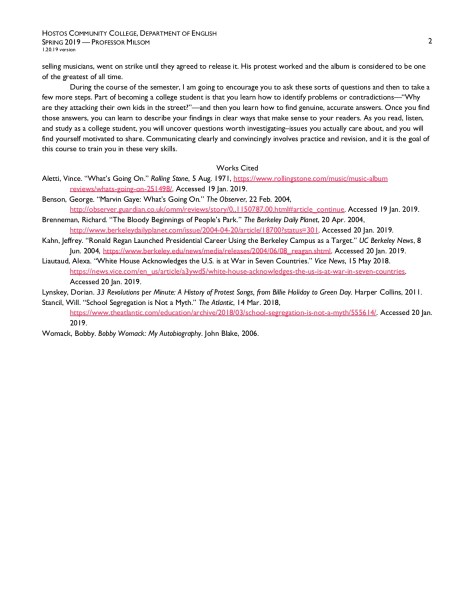
This is all to say that this semester, I’ve written an essay, and I’m slapping it right on the front of the syllabus. Sounds boring. Probably. But at least it includes a picture of Marvin Gaye, whose What’s Going On? album and song are going to structure the theme of the course.

I’m putting this all there partly to have something to point to when I tell them to write an essay. It foregrounds the actual work of our course: writing about stuff we care about. It shows that I am a writer too, and I am insecure about how I write. It does things I expect of their writing: it includes parenthetical citations, probably has some errors or typos, includes a block quotation, and has an MLA Works Cited at the end. The essay also rationalizes the course’s focus (read the end), which is inspired by the story I read about why Obie Benson wrote the song. (Al Benson helped write the lyrics.) After witnessing police shoot thousands of protesters during the “Bloody Thursday” protest in Berkeley in May 1969 . . . No, just read what I wrote, because I find myself on the verge of re-writing the essay. The story is moving and felt just so pertinent in this era of MAGA hats and walls and family separations.

One other thing I’d like to reflect on here is that when I was writing the essay for the syllabus, I was noticing the way in which I was thinking about the students reading it. A lot (most?) of my students were not born in the U.S., so they might not know about things like the “National Guard” or the fact that Ronald Regan was governor of California and was also a U.S. president in the 1980s. I assume also that a bunch of my U.S.-born students wouldn’t know this. Heck, I didn’t actually know exactly what the National Guard was until I just looked it up. There are ways of presenting students with sophisticated ideas (which they can handle) that don’t presume prior knowledge in a patronizing or punitive way. I try to attend to that in my classes and by telling students to look up things on their phones the second they don’t know a word, or when they haven’t heard of an event. (I also really try to change the narrative they’ve heard from a lot of profs and teachers not to use Wikipedia. As someone who edits Wikipedia for fun and is familiar with its standards, I think this is garbage advice, and I bet literally everyone who gives this advice uses Wikipedia.) This is particularly important when you teach a lot of first-generation college students and students from other countries. You have to make things seem accessible, and you have to not be a jerk about it. As an aside: I was just in England for a research trip, and I didn’t even know how to order a god damn hot cup of delicious coffee with half and half in it! Because the whole culture of coffee in England is TOTALLY different, and I just got confused at every turn. I mean, that’s just coffee, not my college education. And I literally study British language and history and literature as a profession. I tweeted about this here:

https://twitter.com/alexandramilsom/status/1084855403668680704

I plan to force students to read my essay on the first day of class. I’ll use it as an opportunity to teach them how to annotate. We’ll talk about the citations and how they’re punctuated. (And I’ll see who the confident readers are based on who volunteers.) We’ll talk about the fact that I left in curse-words from the original quotations—I anticipate that this will shock some of them. And we will talk about the questions I raise at the end of the essay. After we read this, I’m going to show them Cardi B’s Twitter video about the wall as an example of how to approach inquiry like this. She’s well-informed about politics and political debates, she’s a Dominican from the Bronx—like tons of my students, and she’s asking provocative questions about things that don’t make sense in the world that should be fixed. Like the fact that people are working without getting paid on behalf of a president who wants to build a wall. She also raises issues of “respectability” (cf Higgenbotham) that I want to talk about.

https://twitter.com/iamcardib/status/1085959728474271745

To end the first class, I will let students write for a bit about questions they have about “what’s going on” in the world today. To raise the stakes a little bit, to make it more fun, and to adjust them to moving around and publicly sharing their ideas with their classmates, I’ll let them loose to put some of their questions on the board. I hope it will be entertaining, and I also hope that it will make them interested in the course. For a lot, if not most of these students, it will be LITERALLY THEIR FIRST DAY EVER OF COLLEGE, and I want them to feel like their voices are interesting and needed. I read somewhere that something like 60% of college students never talk in their classes, so I hope to put these students in the 40% by the end of the first day!

Things I do to prepare for the school year

I definitely think about syllabi appearances (at the expense of content, I’ll admit):

https://twitter.com/alexandramilsom/status/1033008369492213761

While researching the topic of accessibility and syllabi, I learned that the SIZE of the font is more important to the dyslexic reader than the absence of serifs (though serifs are problematic).

https://twitter.com/alexandramilsom/status/1033009901537308673

https://twitter.com/alexandramilsom/status/1033012058227400706

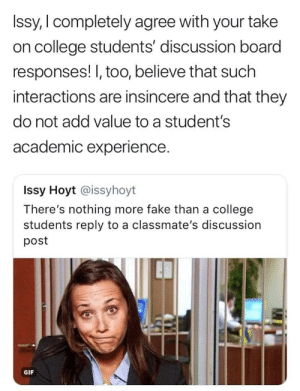
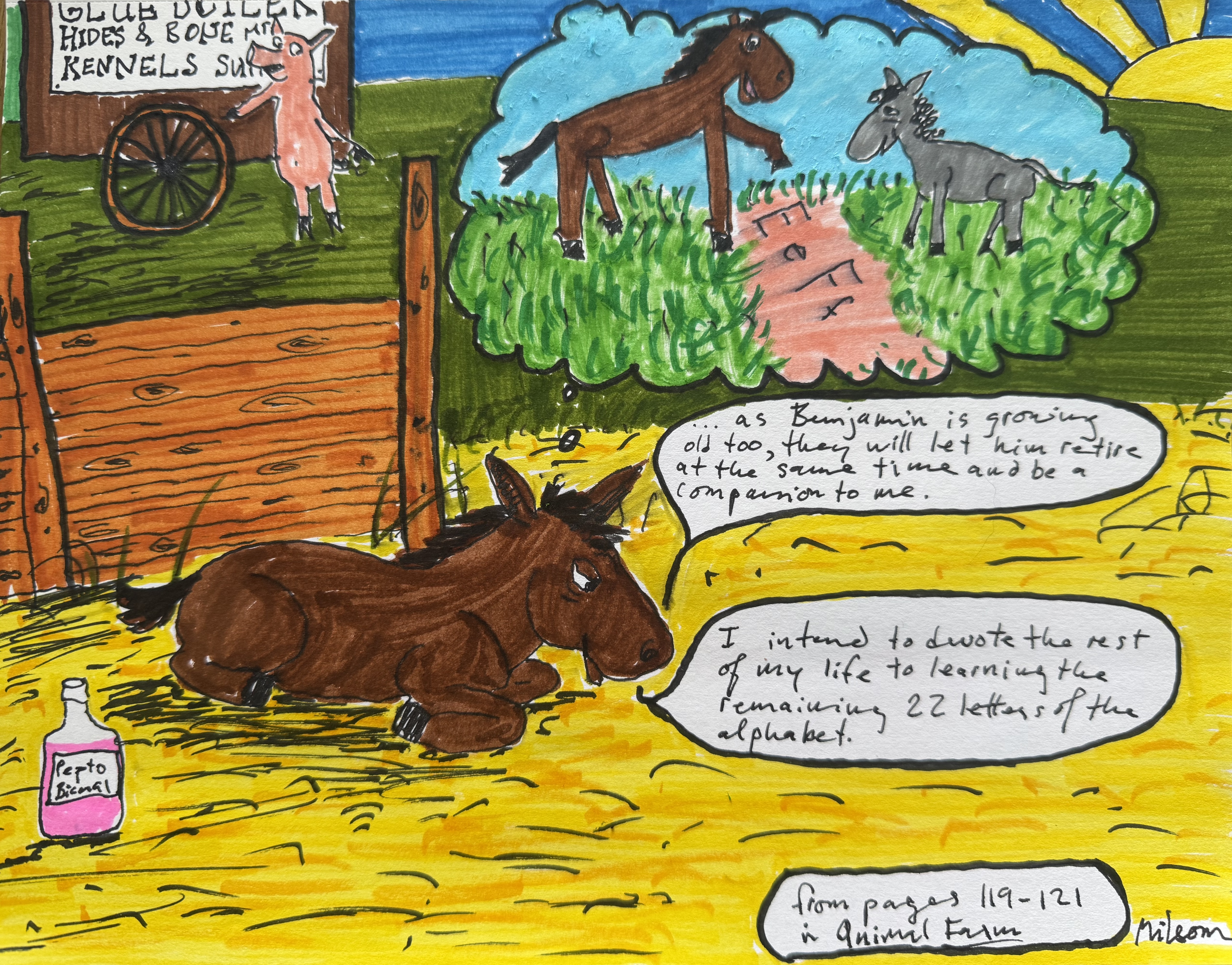
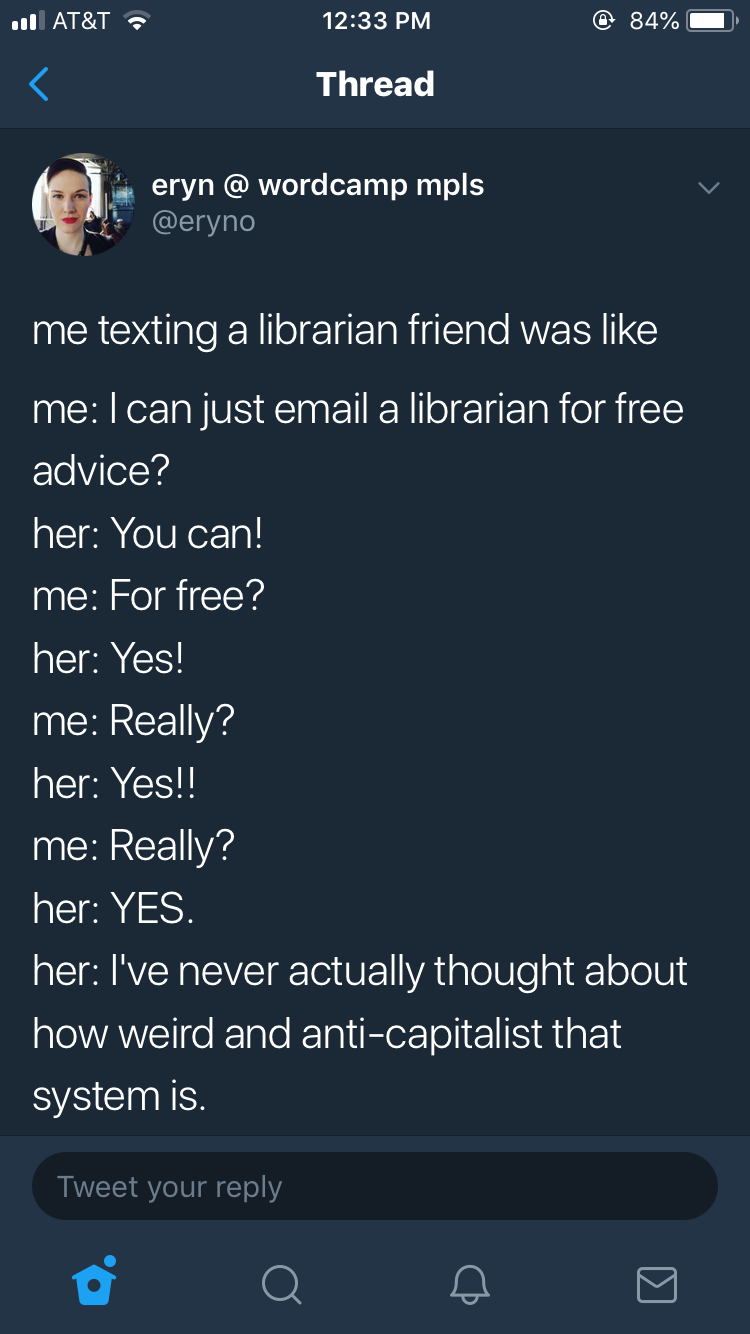
I also have been shoring up some memes and quotations to use in opening-day slides:

Libraries are Free
Libraries are Free

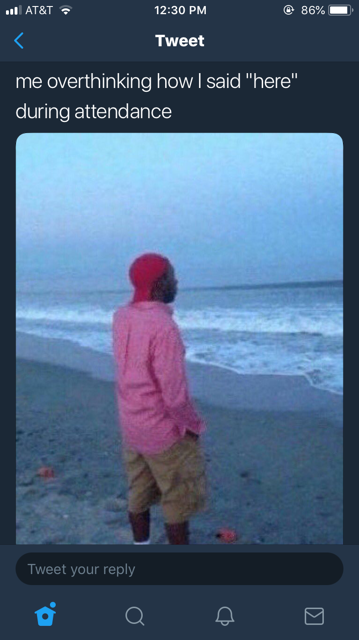
Saying "Here" during Attendance
Saying “Here” during Attendance

Here’s the website I found from the University of Michigan that offers learning support to people with dyslexia.


Here’s the article I found with information about “Good Fonts for Dyslexia.”

Teaching Frankenstein

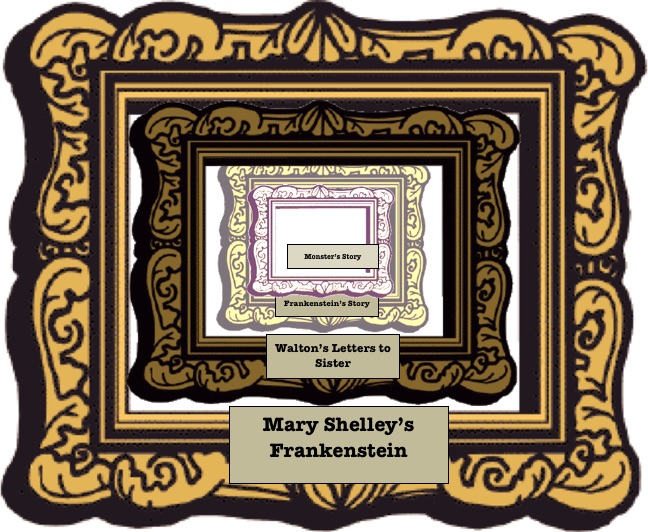
I was recently looking through my teaching materials from semesters of yore and stumbled upon what might be my favorite handouts that I’ve ever made for undergraduates. (I spent a great deal more time making handouts for my high school students in the Bronx… maybe to be shared at a future date; finding them will involve some excavation.) These come from a lecture I gave to a class – English 10B “Literatures in English, 1700-1850” – for which I was a Teaching Assistant for Professor Sarah Kareem. I am particularly amused by these two images, which I passed out and included in the power-point presentation I prepared for this lecture. The first is an image illustrating the “frame narrative” of Shelley’s Frankenstein; the second is the Shelley-Wollstonecraft-Byron-etc family tree. Enjoy!

Milsom Frame Narrative Image Milsom Shelley-Wollstonecraft Tree of Love