While researching the topic of accessibility and syllabi, I learned that the SIZE of the font is more important to the dyslexic reader than the absence of serifs (though serifs are problematic).
Faced with the happy task of writing some syllabi, I’ve been trolling the webs for information about How To Make A Good Syllabus That Both Satisfies Departmental Requirements And Is Accessible. I was particularly motivated by a Twitter discussion I lurked in on—can’t remember the hashtag now—and want to incorporate some of what I’ve learned.
For instance, making use of “Headings” in Word when I’m creating information hierarchies. This was a practice I developed while formatting my dissertation. Now I’m obsessed with clearing formatting on every document I use and re-ordering everything so I can have a nice Navigation Sidebar for every window. (Google Docs actually does a nice job of this as well—it became more convenient to use while teaching high school for various reasons involving sharing and displaying on my SmartBoard.)
Now in search of some helpful advice online, I am collecting sites and listing them below. I hope to keep track of this in some sort of organized fashion:
Also downloaded the Dyslexie font. MIGHT just go ahead and put everything into this font. Not sure if that is even helpful, but I rather like it. . . Here is the page of those who developed this font.
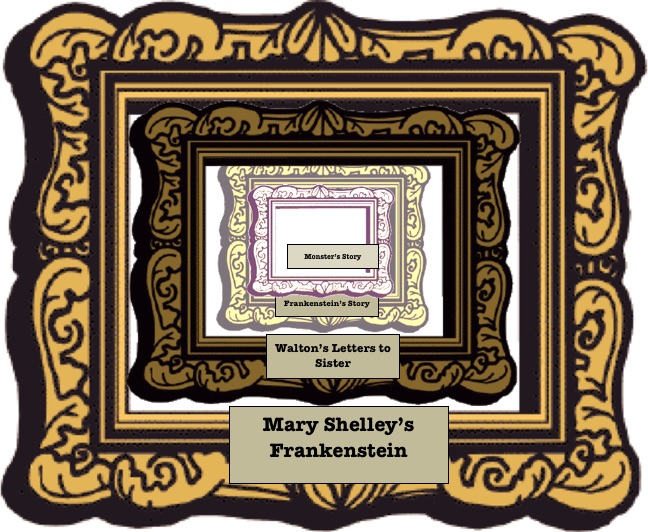
I was recently looking through my teaching materials from semesters of yore and stumbled upon what might be my favorite handouts that I’ve ever made for undergraduates. (I spent a great deal more time making handouts for my high school students in the Bronx… maybe to be shared at a future date; finding them will involve some excavation.) These come from a lecture I gave to a class – English 10B “Literatures in English, 1700-1850” – for which I was a Teaching Assistant for Professor Sarah Kareem. I am particularly amused by these two images, which I passed out and included in the power-point presentation I prepared for this lecture. The first is an image illustrating the “frame narrative” of Shelley’s Frankenstein; the second is the Shelley-Wollstonecraft-Byron-etc family tree. Enjoy!